
What Happens During Residential Recovery? A Guide for Individuals and Families
Making the decision to enter a residential recovery program can feel overwhelming. Whether you're considering treatment for yourself or searching for help for someone you love, it's natural to have questions about what life will actually look like once recovery begins.

One of the most common online searches today is, "What happens during residential recovery?" The fear of the unknown often keeps people from taking the first step toward healing. Understanding what to expect can replace uncertainty with hope.
At Providence Recovery Place, we believe recovery is more than becoming sober—it's about rebuilding every area of life. Through a Christ-centered approach, individuals discover purpose, accountability, healthy relationships, and lasting freedom from addiction.
As part of the life-changing ministry of Providence Ministries, our mission is to help individuals and families find hope through faith, compassion, and practical support. Learn more about our ministry by visiting https://www.providenceministriesinc.com.
Why Residential Recovery Works
One of the greatest challenges in overcoming addiction is trying to recover while remaining in the same environment where substance use developed.
Daily stress, unhealthy relationships, easy access to drugs or alcohol, and familiar routines often become powerful triggers.
A Christian residential recovery program removes many of those distractions by providing a safe, structured environment where healing can begin.
Unlike attempting recovery alone, residential treatment offers:
Daily accountability
A structured schedule
Christian community
Biblical discipleship
Healthy routines
Life skills development
Encouragement from staff and peers
Time to focus completely on recovery
Structure creates stability, and stability creates opportunities for lasting change.
The First Few Days
Many new residents arrive feeling anxious.
Questions such as:
"Will I fit in?"
"What if I fail?"
"Can my life really change?"
are incredibly common.
The first several days are designed to help residents become comfortable with their new surroundings while learning the daily routine.
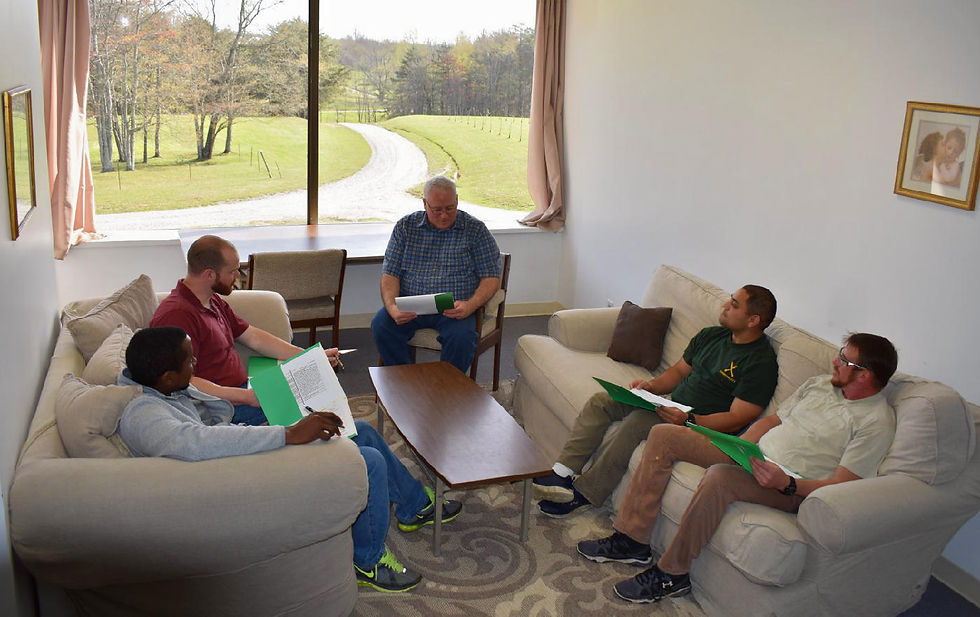
Although every individual has a unique story, many quickly discover something encouraging—they are surrounded by people who understand exactly what they're going through.
Recovery is no longer a journey they have to face alone.
A Typical Day in Residential Recovery
One of the greatest strengths of residential recovery is consistency.
While every program varies, a typical day often includes:
Morning devotion or personal reflection
Chapel or Bible study
Recovery classes
Group discussions
Individual mentoring
Work therapy and responsibility
Meals together
Recreation and exercise
Evening worship or encouragement
Personal quiet time
This daily rhythm helps replace chaos with purpose.
Many individuals coming from addiction have lived without routine for years. Healthy structure helps rebuild confidence, responsibility, and personal discipline.
More Than Sobriety
Successful recovery addresses much more than stopping substance use.
Many individuals entering treatment also struggle with:
Anxiety
Depression
Shame
Broken relationships
Financial difficulties
Loss of purpose
Spiritual emptiness
A faith-based addiction treatment program seeks to restore the whole person.
Residents learn healthier ways to respond to stress, rebuild trust with family members, develop healthy habits, and discover their identity through Christ rather than through addiction.
The Importance of Christian Community
Isolation often fuels addiction.
Community helps break it.
One of the greatest blessings of residential recovery is living alongside others who understand the challenges of addiction.
Residents encourage one another through victories, setbacks, and personal growth.
Scripture reminds us:
"Carry one another's burdens, and so fulfill the law of Christ." — Galatians 6:2
Recovery becomes more than an individual journey—it becomes a shared journey.
Families Are Part of the Healing Process
Addiction affects entire families.
As recovery progresses, families often begin healing alongside their loved one.
Learning healthy communication, rebuilding trust, establishing healthy boundaries, and celebrating progress all become part of the recovery process.
Families frequently discover that healing is not just for the resident—it is for everyone.
Recovery Is About Building a New Life
One misconception is that recovery is simply learning how not to use drugs or alcohol.
Real recovery is learning how to live again.
Residents begin developing:
Healthy relationships
Responsible decision-making
Personal integrity
Spiritual growth
Purpose and direction
Financial responsibility
Servant leadership
Hope for the future
The goal is not merely surviving addiction.
The goal is creating a life worth protecting.
Frequently Asked Questions
Many families ask questions such as:
How long does residential recovery last?
What should I bring?
Can my family visit?
What happens after graduation?
Is faith-based recovery right for me?
Visit our Frequently Asked Questions page for answers to many of the questions families ask before entering recovery.
Begin Your Journey Toward Hope
Taking the first step is often the hardest part of recovery—but it is also the most important.
If you or someone you love is searching for a residential recovery program near me, a Christian residential recovery program, or faith-based addiction treatment, Providence Recovery Place offers an environment where healing, accountability, and hope come together.
Whether you're looking for information about our Men's Recovery Program, Women's Recovery Program, or have questions about admissions, our team is ready to help.
Visit our Men's Recovery, Women's Recovery, Frequently Asked Questions, and Contact Us pages to learn more about our programs and how to begin the admissions process.
Providence Recovery Place is a ministry of Providence Ministries, whose mission is to restore lives through Christ-centered outreach, compassion, and practical care. Learn more about our ministry at https://www.providenceministriesinc.com.
You don't have to face addiction alone. There is hope, healing, and a new beginning waiting for you. Contact Providence Recovery Place today and take the first step toward lasting freedom. Call (423) 447-2340 Men's Recovery or (706) 519-0404 Women's Recovery



Comments